Team
Crossing an ocean the slow way. December 2027.
World's Toughest Row · Atlantic 2027
A bestselling novelist and an emergency physician are rowing 3,000 miles across the Atlantic—because age and injury get to be part of their story, not the end of it.
Race Start
The first American female pair to row the Atlantic.
The Team
Still Making Waves is a pairs team competing in the December 2027 World's Toughest Row—the premier ocean rowing race covering ~3,000 miles from the Canary Islands to Antigua. We bring together two women whose lives have been defined by resilience, reinvention, and refusing to let the expected narrative win.

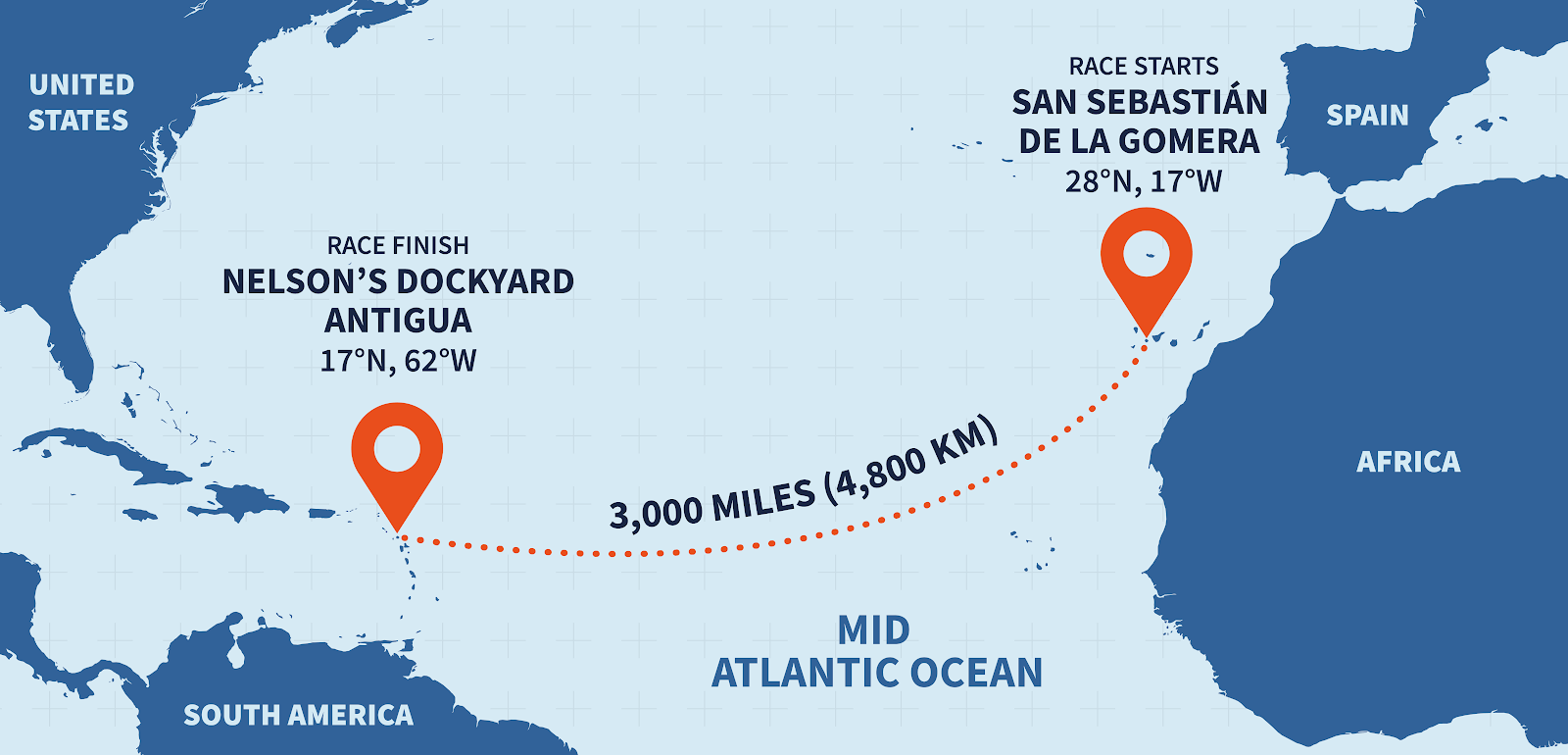
The World's Toughest Row is exactly what it sounds like. Teams row unsupported across the Atlantic, spending 40–60+ days at sea, rowing in shifts around the clock, facing 40-foot swells, sleep deprivation, and relentless physical demand. Fewer people have rowed an ocean than have climbed Everest. In December 2027, Still Making Waves rows from La Gomera in the Canary Islands to English Harbour, Antigua.
La Gomera, Canary Islands → English Harbour, Antigua · ~3,000 miles
Age 41 · Emergency Physician · Columbia, MO
Has broken her neck twice and returned to full active life both times. Adventure background spans summiting Yanapaccha, heli-skiing Alaska, scuba diving the Maldives, sailing 40-knot Caribbean storms, and volunteering at remote clinics from the Amazon to Zambia to the Philippines.
"There's no obstacle that can't be overcome with the right people at your side."

Age 53 · Bestselling Novelist · Colorado Springs, CO
Knows how to build a story that moves people. Now building one with her body, 3,000 miles of open ocean, and a 24-foot boat. Adventure background includes multi-day ultramarathons in multiple countries, hiking Everest Base Camp, an Antarctica marathon, scuba diving, and travel to all seven continents—in one year.
"There may come a day when I cannot do this. Today is not that day."
A bestselling novelist and an emergency physician might seem like an unlikely pair. But when you've spent your life proving that the next chapter is always worth writing—and that broken bones don't get the last word—you recognize a kindred spirit when you meet one. We met in the Philippines on a Global First Responder mission trip—doing hard things in hard places and discovering we shared something bigger than a profession or a passport. That trip became a friendship. That friendship became a dare. And that dare is about to become 3,000 miles of open ocean.

FAQ
Every question we've been asked—including the ones people were clearly too polite to say out loud.
Yes. The World's Toughest Row is a real, actual race across the Atlantic Ocean. In a rowing boat. No engine. No sail. No support boat following behind you with snacks. Over 3,000 miles from La Gomera in the Canary Islands to Antigua in the Caribbean. Hundreds of crews have done it. In December 2027, we're next.
The whole thing. Every single mile of it. There's no ferry halfway, no island pit stop, no "okay that's far enough" option. Once you leave the Canary Islands, the next land you touch is the Caribbean.
No. But honestly not much bigger. It's a purpose-built ocean rowing boat—about 28 feet long, roughly the size of a large SUV. It has two small cabins (and by "cabin" we mean "a space you can crawl into and lie flat, barely"). Two rowing seats. Solar panels. A water desalinator. And that's about it. It is not a yacht. Nobody is sipping anything on a deck.
No. Just oars, arms, and an unreasonable amount of determination. Everything that moves this boat across the ocean comes from us. If we stop rowing, we stop moving. (Actually, that's not entirely true—currents and wind will push you around. Just not always in the direction you want.)
Anywhere from about 40 to 80+ days depending on conditions, crew size, and sheer stubbornness. We'll be rowing in shifts—two hours on, two hours off—24 hours a day. Yes, including at night. Yes, including Christmas.
In theory. The shift pattern is roughly two hours rowing, two hours off. During your "off" time, you eat, manage the boat, and try to sleep in a tiny cabin that's being tossed around by the Atlantic Ocean. It's not exactly a spa retreat. We expect to be running on a level of sleep deprivation that would make new parents nod in solidarity.
Mostly freeze-dried meals and high-calorie snacks. Think astronaut food, but less glamorous and with more rocking. You need around 4,000–5,000 calories a day to keep up with the energy you're burning, so there's a lot of eating involved. The meals are rehydrated with water from our onboard desalinator—which turns ocean water into drinking water. Science is doing a lot of heavy lifting on this trip.
They happen. When they do, you can either try to row through them or deploy a sea anchor (basically an underwater parachute that holds you in place) and ride it out in the cabin. It's loud. It's violent. The boat is designed to self-right if it capsizes. Yes, capsizing is a thing that can happen. No, we don't love thinking about it.
Probably somewhere nearby, yes. But ocean rowing boats aren't really on the shark menu. You're more likely to be visited by dolphins, flying fish (which land on the boat uninvited and at all hours), and the occasional curious whale. The ocean is surprisingly full of life when you're sitting at water level in the middle of it.
A bucket. That's it. That's the answer. There is a bucket and there is the ocean and there is absolutely zero privacy. We will become very comfortable with each other very quickly.
You don't. Not really. Baby wipes are your best friend. Saltwater rinses happen. Freshwater is too precious to waste on showers—it comes from the desalinator and every drop goes to drinking and cooking first. By week three, "clean" becomes a very relative concept.
We do. We have reading glasses and strong opinions about sleep quality to prove it. But here's the thing—ocean rowing isn't about being 25 and indestructible. It's about endurance, mental toughness, and preparation. And those things don't expire at 39. Some of the most successful Atlantic crossings have been made by people in their 40s, 50s, and beyond. We're not rowing in spite of our age. We're rowing because of everything it's taught us.
There was a pause. A long one. Followed by some very specific questions about life insurance. But ultimately—yes, they're behind us. Terrified, probably. But behind us.
If a midlife crisis involves two years of disciplined training, meticulous preparation, mandatory safety certifications, and rowing 3,000 miles across an ocean for charity—then sure. But we prefer to call it a midlife offensive.
Because there may come a day when we can't do this. Today is not that day.
Because no American female pair has ever done this, and we'd like to change that.
And because not every woman will row an ocean. But every woman has one.
Giving Back
Our row is self-funded through sponsorships and fundraising. Every dollar goes toward getting two women and a 24-foot boat safely across the Atlantic—a bill totaling over $100,000. If we raise more than we need (and we hope we do), the surplus goes to organizations close to our story.
Where we first met—on a mission trip in the Philippines. This organization sends medical and emergency professionals to communities that need them most. It's the reason this team exists.
Learn More →Because the conversation our audience is already having deserves more support. This organization works to break the stigma and improve education, resources, and care for women navigating menopause.
Learn More →Team Still Making Waves is not a charity campaign—we're two women rowing an ocean. But if this story can also put resources behind the people and causes that shaped it, even better.
Support the Crossing
This crossing belongs to everyone who believes in it. Pick the piece that's yours.
$10 per mile · 3,000 available
Claim a specific mile of our 3,000-mile crossing to become your piece of the Atlantic. Once a mile is sponsored, it's gone—so pick one that means something to you. A month & day? Your favorite jersey number? Your ATM pin? Lots of options.
Choose Your Mile →$20
You know Janie's writing about this adventure—whether it becomes fiction, nonfiction, or both is still to be determined. But one thing is certain: your name will be in the acknowledgments of a published book, and you'll receive an ebook copy before it's available in stores. Only a bestselling novelist would row an ocean and come home with a manuscript. Expected 2028.
Reserve Your Copy →$30 for a day · $250 for the whole voyage
Every day on the Atlantic, we'll photograph the sunset from the middle of the ocean—a place most people will never see. Pick your day (1–45), and our crew will email you that day's sunset photo in real time so you can see exactly what life on the ocean looked like that day. Want every single sunset? Join as a Whole Horizon member for $250 and receive all 45 photos—your own private gallery from the middle of the Atlantic.
Join the Sunset Club →$100
Your name—or the name of someone you love—is stenciled directly onto the boat itself. Before we launch from the Canary Islands, we'll email you a photo of your chosen name on the hull, and it will be with us all 3,000 miles. Perfect for a dedication or in memory of someone who changed your life.
Put a Name on the Boat →Various amounts
Rowing an ocean requires a lot of very specific gear—from anti-chafe cream to satellite phones to freeze-dried meals (which cost about $15 each and at 3 a.m. in the middle of the Atlantic will feel like the best dinner we've ever had). Browse our registry and buy us something we actually need. Like a wedding registry, except the honeymoon is 3,000 miles of open water.
View the Registry →Want to contribute directly? Every dollar helps get us across.
Donate via GoFundMe →Our Corporate Sponsors
Interested in becoming a corporate sponsor of Still Making Waves? We'd love to hear from you.
teamstillmakingwaves@gmail.com
Follow the Journey
Sign up to follow the story from the very first page.
Get chapter updates, behind-the-scenes stories, and a front-row seat to the Atlantic.
teamstillmakingwaves@gmail.com